
MDF vs Solid Wood Floating Shelves Which is the Better Choice
- 王 一
- Nov 27, 2025
- 3 min read

Floating shelves have become a popular way to add storage and style to any room. They offer a clean, modern look without visible brackets, making them perfect for displaying books, plants, or decorative items. When choosing floating shelves, one of the biggest decisions is the material: MDF or solid wood. Both have their strengths and weaknesses, and understanding these can help you pick the right option for your space and needs.

What is MDF Floating Shelves?
MDF stands for Medium-Density Fiberboard. It is an engineered wood product made by breaking down hardwood or softwood residuals into wood fibers, combining them with wax and resin binders, and forming panels under high temperature and pressure.
Characteristics of MDF Shelves
Smooth surface: MDF has a very smooth surface that makes it easy to paint or laminate.
Uniformity: Unlike natural wood, MDF has no knots or grain patterns, which means it offers a consistent look.
Cost-effective: MDF is generally cheaper than solid wood, making it a budget-friendly option.
Weight: MDF is denser and heavier than some solid woods, which can affect installation.
Pros of MDF Floating Shelves
Affordable and widely available
Easy to customize with paint or veneer
Resistant to warping and splitting
Smooth finish ideal for modern decor
Cons of MDF Floating Shelves
Less durable than solid wood, prone to chipping or denting
Not water-resistant; can swell or degrade if exposed to moisture
Heavier, requiring strong wall anchors for support
What is Solid Wood Floating Shelves?
Solid wood shelves are made from natural wood cut directly from trees. Common woods used include oak, pine, maple, and walnut.
Characteristics of Solid Wood Shelves
Natural grain and texture: Each piece is unique with visible knots and grain patterns.
Durability: Solid wood is strong and can last for decades with proper care.
Weight: Depending on the type of wood, solid wood shelves can be lighter or heavier than MDF.
Finish options: Can be stained, painted, or left natural.
Pros of Solid Wood Floating Shelves
Strong and durable, supporting heavier items
Natural beauty adds warmth and character to a room
Can be sanded and refinished if damaged
Better moisture resistance compared to MDF
Cons of Solid Wood Floating Shelves
More expensive than MDF
Can warp or crack if not properly treated or maintained
Variations in grain and color may not suit all design preferences
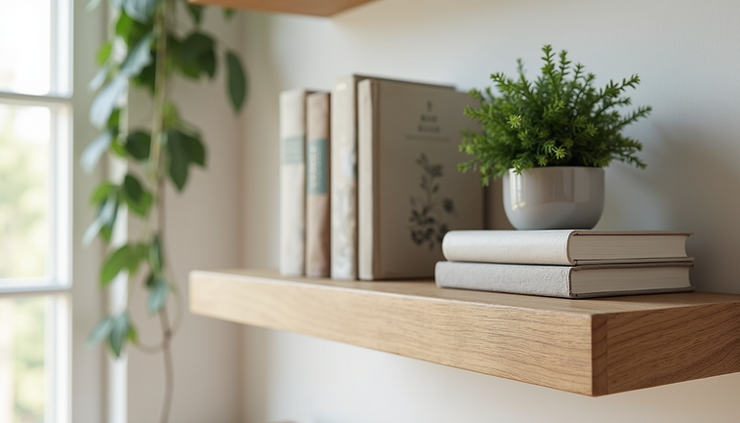
Comparing MDF and Solid Wood Floating Shelves
Appearance
If you want a perfectly smooth, uniform look, MDF is the better choice. It can be painted any color and finished with veneers to mimic wood grain. Solid wood offers natural beauty with unique grain patterns and textures that add character.
Durability and Strength
Solid wood generally outperforms MDF in strength and durability. It can hold heavier items without sagging and withstands wear better over time. MDF is more prone to damage from impacts and moisture.
Cost
MDF shelves are usually more affordable, making them ideal for budget-conscious projects or temporary setups. Solid wood shelves cost more but offer long-term value and a premium look.
Installation
Both types require secure mounting, but MDF’s heavier weight means you need stronger anchors. Solid wood shelves vary in weight depending on the wood species.
Maintenance
Solid wood shelves can be sanded and refinished if scratched or worn. MDF cannot be repaired easily once damaged. Also, MDF should be kept dry to avoid swelling.
Which One Should You Choose?
Your choice depends on your priorities:
For budget and a smooth, painted finish: MDF is a practical option.
For durability and natural aesthetics: Solid wood is worth the investment.
For humid areas like bathrooms: Solid wood with proper sealing is better.
For heavy storage needs: Solid wood shelves provide stronger support.
Practical Examples
A modern living room with bright white walls and colorful decor might benefit from MDF shelves painted in bold colors.
A rustic kitchen or study with warm tones and natural materials would look great with solid wood shelves showcasing the grain.
For a kid’s room, MDF shelves can be a cost-effective way to add storage, but solid wood might last longer through wear and tear.


Comments